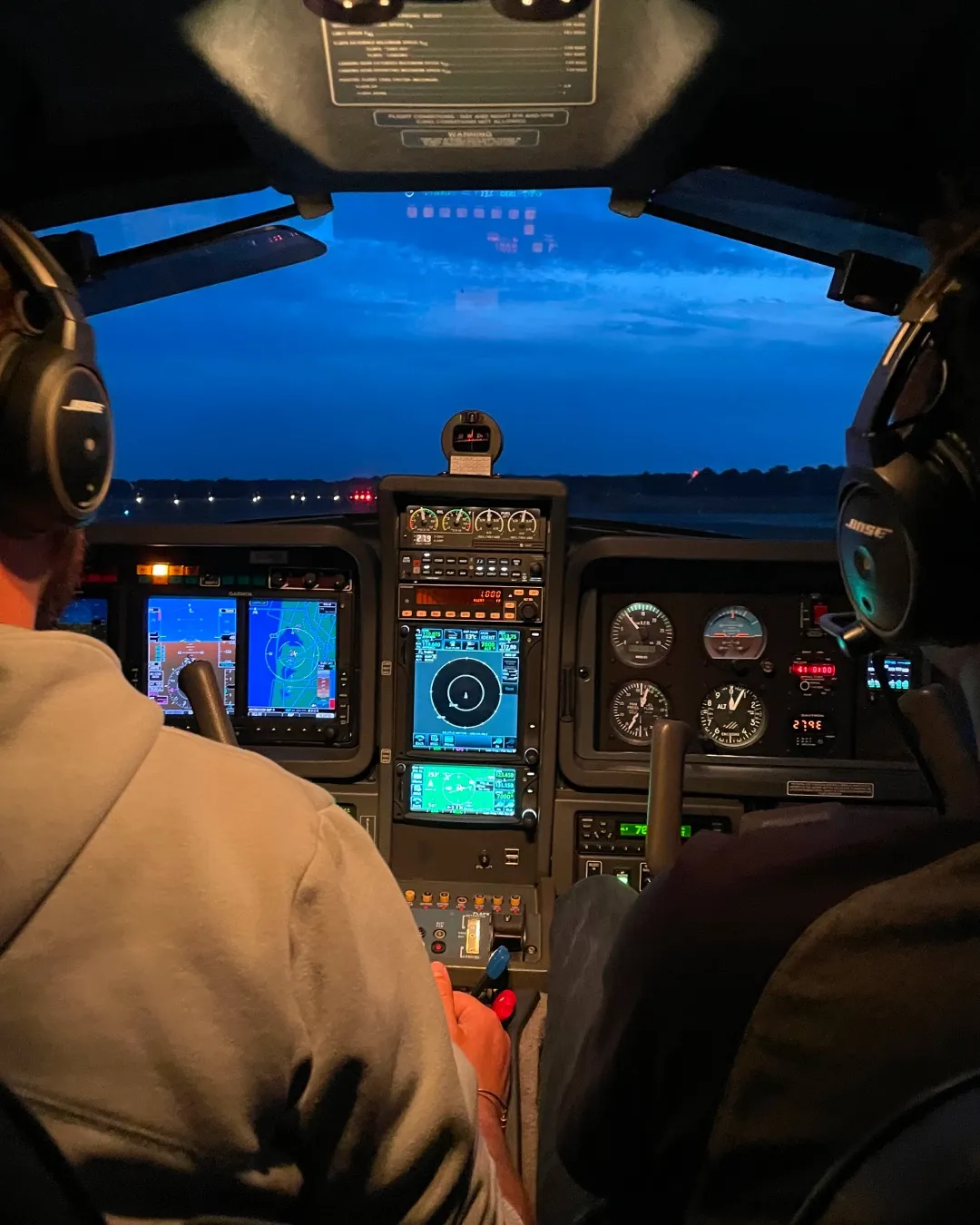
It has been 11 weeks since your last flight. Your licence is valid, your SEP rating has months left to run, and the aircraft is booked for Sunday. Can you take a passenger? What if the return leg is at night?
The answer does not sit on a single “currency” clock. EASA separates recent experience, licence and medical validity, class or type rating validity, instrument rating validity, and operator training. Mixing those rules is how pilots end up applying an FAA instrument rule in Europe or scheduling three night landings when Part-FCL asks for one.
This guide uses the current EASA Easy Access Rules for Aircrew, including the FCL.060 wording applicable from 18 February 2026.
TL;DR
- General 90-day rule: To operate in commercial air transport or carry passengers, complete at least three takeoffs, approaches, and landings as pilot flying in the preceding 90 days. Use the same aircraft type or class, or an FFS representing it.
- Night as PIC: Complete at least one takeoff, approach, and landing at night as pilot flying in the preceding 90 days, or hold an instrument rating.
- An IR is not a complete exemption: It satisfies the additional night condition, not the general three-event requirement.
- EASA has no general six-approaches-in-six-months IR rule: An IR is normally valid for one year and is revalidated through the applicable proficiency check process.
- SEP rating validity is a different clock: A single-pilot single-engine class rating is normally valid for two years. SEP/TMG revalidation by experience requires 12 hours in the last 12 months of validity, including six hours as PIC, 12 takeoffs and landings, and refresher training of at least one hour.
- LAPL holders have another recent-experience rule: LAPL(A) privileges depend on experience during the preceding two years or a proficiency check.
The five clocks pilots often confuse
Calling everything “currency” makes a simple question harder than it needs to be. Start by identifying which privilege you are trying to exercise.
| Requirement | What it controls | Typical clock |
|---|---|---|
| FCL.060 recent experience | CAT operations and carrying passengers | Rolling 90 days |
| LAPL recent experience | Exercise of LAPL privileges | Preceding two years for LAPL(A) |
| IR validity | Exercise of instrument-rating privileges | Normally one year |
| Class or type rating validity | Right to operate the relevant class or type | Normally two years for single-pilot single-engine class ratings; one year for most others |
| Operator training and checking | Duties for a commercial operator | Operator programme under Part-ORO |
A valid licence does not make all five rows current. A PPL holder can have a valid SEP rating but lack the recent experience to carry passengers. A pilot can meet FCL.060 today but be unable to fly tomorrow because the class rating expires. A valid IR can satisfy the additional FCL.060 night condition while still being subject to its own revalidation date.
Before any flight, also check the medical certificate, licence privileges, differences training, and any operator or national requirements that apply. FCL.060 is a legal floor, not a complete dispatch checklist.
The general FCL.060 rule
FCL.060(b)(1) applies when a pilot operates an aircraft in commercial air transport or for carrying passengers. This wording matters. It covers a private pilot carrying passengers, but it can also apply to CAT flights without passengers, such as cargo operations.
To act as PIC or co-pilot in that operation, the pilot must have completed, during the preceding 90 days:
- At least three takeoffs
- At least three approaches
- At least three landings
- As pilot flying
- In an aircraft of the same type or class, or an FFS representing that type or class
- In single-pilot or multi-pilot operations, according to the privileges held
This is a rolling period. It is not “three calendar months,” and it is not reset by a flight on the first day of a month. For a flight planned on 21 September, count back 90 days from the time of the planned operation and identify the qualifying events still inside the window.
The rule says pilot flying, not simply PIC. A pilot monitoring does not gain a qualifying event because the aircraft took off and landed during the flight. Your records need to show that the events belong to you.
Same type or class means what it says
For aircraft operated under a class rating, the relevant class controls the credit. SEP land and MEP land are separate classes. Flying a twin does not automatically refresh SEP recency, or the other way around.
Part-FCL has limited provisions for aeroplanes with similar handling and operating characteristics when the applicable operational suitability data defines the credit. There is also a specific rule for groups of similar non-complex helicopter types, including a two-hour experience condition in each type during the preceding six months. Those are defined exceptions, not a general invitation to combine unrelated aircraft.
If you fly several variants, classes, or types, track the qualifying events against the privilege you will actually use.
Does a touch-and-go count?
FCL.060 requires takeoffs, approaches, and landings. It does not add an FAA-style “to a full stop” condition. Do not import the FAA night rule into Part-FCL.
That does not mean every manoeuvre in every training device automatically qualifies. The event must be a takeoff, approach, and landing performed as pilot flying in the required operational context. If a national authority, operator, examiner, or approved training programme has a more specific procedure, follow it.
Night recency under FCL.060
The night rule is often overstated. EASA does not require three night takeoffs and three night landings under FCL.060(b)(2).
To act as PIC at night in the operation covered by FCL.060, the pilot must meet one of two alternatives:
- During the preceding 90 days, complete at least one takeoff, approach, and landing at night as pilot flying in the same type or class, or an FFS representing it.
- Hold an instrument rating.
This condition sits alongside the general rule. A current IR satisfies the additional night requirement, but the pilot still needs the three takeoffs, approaches, and landings required by FCL.060(b)(1). Without an IR, one of those three cycles can be the qualifying night cycle. You do not need three daytime cycles plus a fourth cycle at night.
Part-FCL defines night as the period between the end of evening civil twilight and the beginning of morning civil twilight, unless the appropriate authority prescribes another sunset-to-sunrise period. That is why a fixed “30 minutes after sunset” shortcut is unreliable across European latitudes and seasons. Our guide to how EASA night time is calculated covers the boundary in more detail.
Can an FFS count for single-pilot recency?
Yes. The current FCL.060(b)(1) and (b)(2) text allows an FFS representing the same type or class. It does not reserve that option for airline or multi-pilot crews.
The important limitation is operational context. The three events must be completed in single-pilot or multi-pilot operations according to the privileges held. A generic simulator session or an unqualified desktop simulator is not an FFS credit. The device must represent the relevant type or class, and the recorded events must match the rule.
This is also narrower than saying “simulators count.” Part-FCL uses defined FSTD categories in different rules. FCL.060 specifically names an FFS. Other devices may be permitted for a rating revalidation or training exercise under a different provision, but that does not make them interchangeable for 90-day recent experience.
What to do when the 90-day window has lapsed
For a private, non-CAT operation, FCL.060 does not prevent a flight without passengers merely because passenger recency has lapsed. If your licence, medical, class or type rating, and all other required privileges remain valid, you can regain the qualifying events without carrying passengers.
Depending on your circumstances, that may mean:
- Flying solo and completing the required events
- Flying with a qualified instructor or examiner
- Using a qualifying FFS representing the relevant type or class
AMC1 FCL.060(b)(1) clarifies that an instructor or examiner aboard a flight conducted to restore recent experience is not treated as a passenger. EASA guidance also says passengers should not be aboard when the pilot completes the three events under instructor supervision.
An expired class or type rating is different. You cannot treat a solo recency flight as a workaround for an invalid rating. Complete the applicable renewal process first.
The CAT extension to 120 days
FCL.060(c) provides a specific route for commercial air transport. The 90-day periods in the general and night provisions may be extended to a maximum of 120 days while the pilot undertakes line flying under the supervision of a type rating instructor or examiner.
If the pilot does not comply with that supervised-line-flying provision, the regulation calls for a training flight with an instructor qualified under Subpart J. The flight must include the required takeoffs, approaches, and landings before the pilot exercises the relevant privileges again.
This is not a blanket 120-day grace period for private passenger flying. It belongs to the CAT framework and depends on the stated supervision.
LAPL recent experience is a separate rule
LAPL pilots should not stop at FCL.060. FCL.140 contains recent-experience conditions for exercising LAPL privileges.
For LAPL(A) privileges, the holder must have completed during the preceding two years:
- At least 12 hours as PIC, dual, or solo under instructor supervision
- At least 12 takeoffs and landings
- Refresher training of at least one hour total flight time with an instructor
The alternative is to pass a LAPL proficiency check with an examiner. The dual, supervised solo, refresher training, and proficiency check entries must be logged and signed as required.
For LAPL(H), the structure is different. The pilot uses a 12-month window on the relevant helicopter type, with six hours, six takeoffs, approaches, and landings, and at least one hour of refresher training, or completes a proficiency check. Always use the paragraph for your aircraft category rather than borrowing the aeroplane numbers.
Meeting LAPL recent experience does not automatically answer the passenger question. When carrying passengers, apply FCL.060 as well as the licence-specific conditions.
EASA instrument recency is not six approaches in six months
The “six approaches, holding, and intercepting and tracking in six months” test belongs to the FAA system. It is not the general EASA IR recency rule.
Under FCL.625, an EASA instrument rating is normally valid for one year. To keep exercising the privileges without interruption, the pilot revalidates it through the applicable proficiency check during the final three months of validity. The aircraft-category provisions determine which parts of the check apply and which training device can be used.
For an IR(A) revalidation that is not combined with a class or type rating revalidation, an FNPT II or FFS representing the relevant class or type may be used. At least every alternate IR(A) proficiency check must be completed in an aeroplane.
If the IR expires, renewal can require an assessment by an ATO or an operator specifically approved for evidence-based training, refresher training when needed, and a proficiency check or applicable EBT practical assessment. After seven years without revalidation or renewal, FCL.625 adds theoretical-knowledge examination and skill-test requirements.
The practical lesson is simple: track the printed expiry date and the correct revalidation window. Do not wait for a fictional six-approach counter to tell you whether an EASA IR is valid.
SEP and type rating revalidation are not 90-day recency
Class and type ratings control whether you may operate the aircraft at all. FCL.740 gives them their own validity and revalidation rules.
A single-pilot single-engine class rating is normally valid for two years. Most other class and type ratings are normally valid for one year, unless operational suitability data provides otherwise.
For an SEP or TMG rating, FCL.740.A offers two main revalidation routes:
Revalidation by proficiency check
Pass a proficiency check in the relevant class with an examiner during the three months immediately before the rating expires.
Revalidation by experience
During the 12 months immediately before expiry, complete in the relevant class:
- 12 hours of flight time
- Six hours as PIC
- 12 takeoffs and 12 landings
- Refresher training of at least one hour total flight time with an FI or CRI
The refresher training can be exempted when the pilot has passed one of the qualifying tests, checks, EBT assessments, or assessments of competence specified by the rule. When all conditions are met and the instructor has the relevant FCL.945 privileges, the instructor may endorse the new expiry date.
The important correction is the word or. Revalidation by experience does not also require an SEP proficiency check. The proficiency check is the alternative route.
Multi-engine class and type rating revalidation follows different requirements, normally including a proficiency check and applicable route-sector experience. Do not reuse the SEP formula for an MEP or type rating.
| Situation | Can you operate the aircraft? | Can you carry passengers or operate in CAT? |
|---|---|---|
| Rating valid, FCL.060 met | Yes, subject to all other requirements | Yes |
| Rating valid, FCL.060 lapsed | A non-CAT flight without passengers may be possible | No, until recency is restored |
| Rating expired, FCL.060 events still within 90 days | No, unless operating under a specific training, test, or renewal provision | No |
Commercial operator requirements sit on top
Airline and other CAT pilots are not governed by FCL.060 alone. Part-ORO includes operator conversion, recurrent training and checking, line checks, route and aerodrome knowledge, and other programme requirements. The central recurrent-training provision is ORO.FC.230, not ORO.FC.100.
An operator’s training department will normally manage those records, but that does not change the underlying legal distinctions. A simulator check may satisfy several requirements when the rules and approved programme permit credit. It does not erase the need to identify which check, recent-experience condition, or rating revalidation was actually completed.
The current EASA Easy Access Rules for Air Operations are the right source for operator-specific obligations. Freelance pilots and pilots working across operators should be especially careful not to assume one operator has a complete picture of their activity elsewhere.
Proving recency in your logbook
FCL.050 requires a reliable record of every flight in the form and manner established by the competent authority. AMC1 FCL.050 supplies the standard fields needed to show recent experience, including:
- Date, departure, and arrival details
- Aircraft make, model, variant, and registration
- Single-engine, multi-engine, or multi-pilot time where applicable
- Total flight time and pilot function
- Number of landings as pilot flying, split between day and night
- Night and IFR time
- FSTD type, qualification number, exercise, date, and duration when applicable
- Signatures and remarks for training, checks, or supervised activity when required
FCL.060 does not literally say that an undocumented event never happened. The practical problem is proof. If the record does not identify the pilot-flying event, aircraft class or type, operational context, and night condition when relevant, demonstrating compliance to an examiner, operator, or authority becomes much harder.
Our EASA pilot logbook requirements guide explains the full AMC1 FCL.050 format.
How Skyden handles the 90-day view
Skyden automatically classifies takeoffs and landings as day or night from the flight times and airport coordinates. On multi-pilot flights, pilot-flying and pilot-monitoring status controls who receives those events. Pilot Status then uses the logged data to show the Part-FCL counts: three takeoffs and landings in 90 days, plus the one-event night condition or IR alternative. This helps pilots spot a deadline before a planned passenger flight.
The app is deliberately clear about the limit of that calculation. It does not decide type or class equivalence, simulator equivalence, or whether a particular event meets every operational condition. Those checks remain with the pilot and, where applicable, the operator, instructor, examiner, or competent authority.
Record day and night landings, pilot function, aircraft details, and simulator sessions accurately. A status screen can only be as reliable as the data behind it.
A practical pre-flight check
Before a CAT or passenger flight, work through the questions in this order:
- Are the licence, medical, and relevant class or type rating valid? If not, FCL.060 recency cannot repair the missing privilege.
- Which class or type will I operate? Filter the logbook to the relevant aircraft, accounting only for a defined OSD cross-credit if one applies.
- Do I have three takeoffs, approaches, and landings as pilot flying in the preceding 90 days? Confirm the single-pilot or multi-pilot context matches the privilege.
- Will I act as PIC at night? Confirm one qualifying night cycle in 90 days or a valid IR.
- Am I using an FFS credit? Confirm that it represents the type or class and that the session record contains the required detail.
- Do licence-specific or operator rules add another condition? Check LAPL recent experience, IR validity, operator recurrent training, route qualifications, and national requirements as applicable.
That sequence keeps a 90-day landing count from hiding an expired rating, and it keeps a valid IR from being mistaken for a universal night-passenger exemption.
Frequently asked questions
What are the EASA 90-day recency requirements?
For CAT operations or carrying passengers, FCL.060 requires at least three takeoffs, approaches, and landings as pilot flying during the preceding 90 days. Complete them in the same aircraft type or class, or in an FFS representing it, and in the appropriate single-pilot or multi-pilot context.
How many night landings does EASA require to carry passengers?
The additional PIC-at-night condition is one takeoff, approach, and landing at night as pilot flying during the preceding 90 days. Holding an IR is the alternative. It is not three night landings.
Does an instrument rating replace EASA night recency?
An IR satisfies FCL.060(b)(2), the additional night condition. It does not replace the three takeoffs, approaches, and landings required by FCL.060(b)(1).
Can a simulator count toward FCL.060 recency?
An FFS representing the same type or class can count. FCL.060 does not limit this route to multi-pilot aircraft, but the events must match the single-pilot or multi-pilot privileges held. A generic simulator or desktop programme is not enough.
Do MEP flights count toward SEP recency?
Not automatically. SEP and MEP are distinct classes. Credit across aircraft is available only where a specific provision, such as applicable operational suitability data for similar aircraft, permits it.
Can I fly solo if my EASA passenger recency has expired?
FCL.060 alone does not prohibit a non-CAT flight without passengers. You still need a valid licence, medical, class or type rating, and every other required privilege. You may also restore recent experience with an instructor, examiner, or qualifying FFS as appropriate.
Does EASA require six instrument approaches every six months?
No. That is not the general Part-FCL IR rule. An EASA IR is normally valid for one year and is kept valid through the applicable FCL.625 revalidation and proficiency check process.
Official sources
- EASA Easy Access Rules for Aircrew, Regulation (EU) No 1178/2011
- Commission Regulation (EU) No 1178/2011 and amendments
- EASA Easy Access Rules for Air Operations, Regulation (EU) No 965/2012
This article is a practical summary, not legal advice. Use the current regulation, your competent authority’s instructions, and your operator’s approved procedures for a specific flight.
 Try Skyden Free