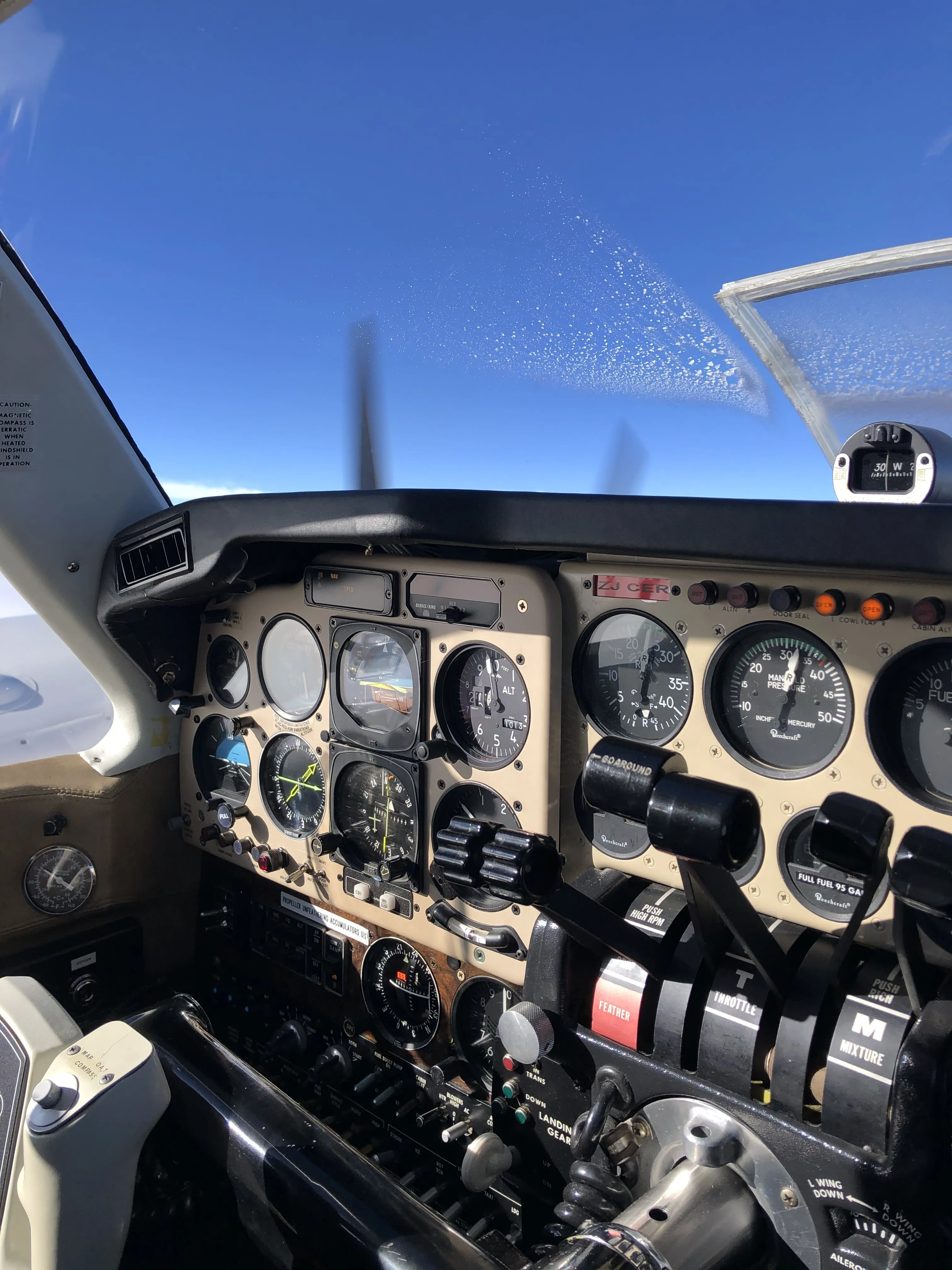
A two-hour flight can produce two hours of IFR time, twenty minutes of actual instrument time, or no loggable FAA instrument time at all. All three answers can be correct.
The confusion comes from treating IFR, instrument meteorological conditions, and instrument time as synonyms. They describe different things:
- IFR is a set of operating rules.
- IMC describes meteorological conditions.
- Instrument time is a logbook category tied to controlling an aircraft solely by reference to instruments.
FAA and EASA records then handle those concepts differently. Before copying the block time into an instrument column, identify which authority applies and what the field means.
TL;DR
- FAA §61.51(g) permits instrument time only while the pilot operates the aircraft solely by reference to instruments under actual or simulated instrument conditions.
- An FAA IFR clearance in VMC does not create instrument time. Log only the qualifying portion of the flight.
- Actual instrument is not simply another name for the full IFR flight. Use a conservative, fact-based record of the periods when outside references were unavailable or unusable and you flew by instruments.
- Simulated instrument time in an aircraft requires a view-limiting device and a qualified safety pilot under §91.109.
- The pilot under the hood logs simulated instrument time. The safety pilot does not.
- A safety pilot may sometimes log SIC or PIC, but only during the required-crewmember period and only when the qualifications and agreed command roles support it.
- FAA instrument approaches used for recent experience need their location and type recorded, plus the safety pilot’s name when required.
- EASA IFR time means all flight time under IFR. EASA instrument flight time means controlling an aircraft solely by reference to instruments. EASA instrument ground time is instruction in simulated instrument flight in an FSTD.
- EASA has no general six-approaches-in-six-months rule. Its IR validity and revalidation system is different from FAA recent experience.
Four terms that should not share one column
| Term | What it describes | Does it automatically create instrument time? |
|---|---|---|
| IFR | Rules under which the aircraft operates | No under FAA rules; EASA separately records IFR flight time |
| IMC | Meteorological conditions below the VMC criteria | Not by itself; the logging test also concerns flight solely by instruments |
| Actual instrument | FAA logbook condition during qualifying flight by instruments without simulated restrictions | Yes, for the qualifying period |
| Simulated instrument | Flight solely by instruments with outside vision deliberately restricted, or approved device work | Yes, when all applicable conditions are met |
A clearance tells ATC how the flight is being operated. Weather reports describe the atmosphere. The logbook records what the pilot did. One fact cannot substitute for the others.
The FAA instrument-time rule
14 CFR §61.51(g)(1) states that a person may log instrument time only for the flight time during which that person operates the aircraft solely by reference to instruments under actual or simulated instrument flight conditions.
Two elements must overlap:
- You operate the aircraft solely by reference to instruments.
- The operation occurs under actual or simulated instrument flight conditions.
An IFR flight plan, an ATC clearance, or an instrument rating does not replace either element. If you fly an IFR clearance above a cloud layer with an unobstructed horizon and normal outside references, that clear-air portion is not FAA actual instrument time.
IFR in VMC
Suppose you fly 2.3 hours under IFR. Departure and arrival are visual, the cruise is above a scattered layer, and you never need to control the aircraft solely by reference to instruments.
Your FAA record can show:
- Total flight time: 2.3
- IFR tracked for personal or employer purposes: 2.3
- Actual instrument: 0.0
- Simulated instrument: 0.0
The FAA does not establish IFR time as one of the §61.51(b)(3) conditions-of-flight categories. Pilots and operators may still track it separately. Just do not transfer it into actual instrument.
IFR with part of the flight in actual conditions
Now suppose a 2.3-hour IFR flight includes 12 minutes in a cloud layer after departure and 18 minutes in actual conditions during arrival.
If you controlled the aircraft solely by reference to instruments during those periods, log 30 minutes of actual instrument time. In decimal notation that is 0.5. The remaining 1.8 hours remain flight time, but they are not instrument time under §61.51(g).
Record entry and exit times during the flight. Reconstructing short cloud encounters from memory a week later is unreliable.
What counts as actual instrument time?
Part 61 does not supply a neat visibility or ceiling number for the phrase “actual instrument flight conditions.” The governing §61.51(g) test is whether the pilot operated solely by reference to instruments under actual instrument conditions.
Cloud, fog, heavy precipitation, or an obscured horizon can create such conditions. Crossing a regulatory weather threshold does not automatically decide every logging case. A pilot can encounter conditions in which flight instruments become necessary even when a reported visibility number does not tell the whole story. Conversely, filing IFR does not prove that outside references disappeared.
Use a conservative method:
- Start the instrument clock when external references cease to be usable and you control the aircraft solely from the instruments.
- Stop when useful outside references return and you resume using them.
- Add the qualifying intervals.
- Keep the precision consistent with the rest of your logbook.
Do not log the entire block or airborne time because the flight touched one cloud. Also avoid pretending that a stopwatch can resolve every transition to the second. A reasonable contemporaneous record is better than false precision.
Actual conditions and flight legality are separate
A pilot can encounter actual instrument conditions without planning to do so. Whether the flight was legal depends on the pilot’s certificate, ratings, currency, aircraft equipment, clearance, and operating rules.
Logging a factual encounter does not grant missing privileges or repair a regulatory violation. This distinction matters when a VFR pilot inadvertently enters IMC. The flight may contain a factual period of instrument operation, but the pilot should not present the entry as proof that the operation was authorized.
How simulated instrument time works in an aircraft
Simulated instrument time is created by restricting the flying pilot’s outside view, commonly with a hood, foggles, or another view-limiting device. The flying pilot must control the aircraft solely by reference to instruments.
14 CFR §91.109 requires the other control seat to be occupied by a safety pilot who possesses at least a private pilot certificate with category and class ratings appropriate to the aircraft. The safety pilot must have adequate forward and side vision, or a competent observer must supplement that view. Applicable medical requirements also matter because the safety pilot is a required flightcrew member during the simulated-instrument portion.
The pilot under the hood records:
- Simulated instrument time for the qualifying interval
- The safety pilot’s name
- PIC time when the §61.51(e) sole-manipulator conditions are met
- Approach details when the approaches will be used for FAA instrument recent experience
The simulated instrument clock begins when the view-limiting device is in use and the pilot is flying solely from the instruments. It ends when the device comes off. Taxi, visual departure setup, traffic-pattern positioning, and the safety pilot’s ride home do not become simulated instrument time.
What the safety pilot can log
The original draft made safety-pilot logging sound automatic. It is not. The two pilots should agree before departure who will act as PIC during the hood portion.
Safety pilot not acting as PIC
If the hood pilot acts as PIC and manipulates the controls, the safety pilot may log SIC during the simulated-instrument portion under §61.51(f), provided the safety pilot holds the required category and class ratings and any instrument rating required for the flight.
The FAA’s Trussell legal interpretation confirms that the safety pilot is a required crewmember only while the other pilot operates in simulated instrument conditions. The safety pilot cannot extend the SIC entry to the visual portions merely because both pilots remained aboard.
Safety pilot acting as PIC
If the safety pilot agrees to act as PIC during the hood portion and is fully qualified to do so, that pilot may log PIC for that period under §61.51(e)(1)(iii). The hood pilot may simultaneously log PIC as sole manipulator under §61.51(e)(1)(i) when rated for the aircraft.
This is one of the legitimate cases in which two pilots can log PIC during the same clock time for different reasons. It is not double-counting by one person.
The acting PIC must satisfy the requirements to act as PIC for the operation. Depending on the flight, that can include endorsements, recent experience, an instrument rating, instrument currency, and medical qualification. Calling someone “safety pilot” does not waive those requirements.
What the safety pilot cannot log
The safety pilot cannot log instrument time. Their job is to maintain visual lookout, so they are not flying solely by reference to instruments.
The safety pilot also cannot log the entire flight merely because the hood pilot used a view-limiting device for one part of it. Log only the period supported by the applicable PIC or SIC provision.
Can the instructor log instrument time?
FAA §61.51(g)(2) expressly permits an authorized instructor to log instrument time while conducting instrument flight instruction in actual instrument flight conditions.
That produces two different results:
- During instruction in actual conditions, the student who operates solely by instruments may log actual instrument time. The authorized instructor may also log instrument time under §61.51(g)(2).
- During a hood lesson in VMC, the student logs simulated instrument time. The instructor who is maintaining outside visual reference does not log simulated instrument time merely for teaching the lesson.
The instructor still logs the appropriate instruction and PIC time when the relevant provisions allow it. Instrument time is a separate column with its own test.
An instrument-rating applicant can also log qualifying actual instrument time while receiving instruction before holding the instrument rating. The instructor acts as PIC for the IFR operation; the applicant’s instrument time records operation solely by reference to instruments. PIC logging, if claimed, must independently satisfy the sole-manipulator rule and appropriate aircraft rating requirements. Acting as PIC and logging PIC are different legal questions.
Logging approaches for FAA recent experience
Instrument time and an instrument approach are related but separate records. Under §61.51(g)(3), an approach used for FAA instrument recent experience must include:
- The location of the approach
- The type of approach
- The safety pilot’s name, when one was required
“Six approaches” is not enough. A useful entry looks like:
RNAV (GPS) RWY 17 KAPA x2; ILS RWY 35R KAPA x2; VOR-A KCFO x2; holding at CASSE; VOR and GPS intercepting and tracking; simulated instrument 1.4; safety pilot Alex Martin.
The FAA’s InFO 15012 explains when an approach may be logged for currency or training. The pilot must operate solely by reference to instruments, remain established on each required segment to MDA or DA/DH, and maintain simulated conditions to that point when using a view-limiting device or training device. The missed-approach segment is not required for the approach entry, although practicing it remains useful.
An approach flown visually from start to finish cannot be turned into an FAA currency approach simply because ATC issued an instrument approach clearance.
Device time belongs in its own record
An FFS, FTD, or ATD session can provide instrument experience or recent-experience credit when the device and session meet the applicable rules. It is not aircraft actual instrument time.
For certificate or rating experience, §61.51(g)(4) requires an authorized instructor to observe and sign the record. For instrument recency, §61.51(g)(5) requires the device, time, and content to be recorded; an instructor is not required solely by that paragraph.
Device approvals and credit limits vary. Our guide to logging simulator time covers ATD, FTD, FFS, FNPT, and BITD records in detail.
EASA uses different definitions
The EASA section in the original draft incorrectly imported the FAA six-approach rule into Part-FCL. It also treated the EASA IFR field as if it represented actual instrument time. Both points needed correction.
The EASA Easy Access Rules for Aircrew define:
- Flight time under IFR: all flight time during which the aircraft is operated under Instrument Flight Rules.
- Instrument flight time: time during which a pilot controls an aircraft in flight solely by reference to instruments.
- Instrument ground time: time during which a pilot receives instruction in simulated instrument flight in an FSTD.
- Instrument time: instrument flight time plus instrument ground time.
These definitions let an EASA logbook show more IFR time than instrument flight time. A three-hour sector operated under IFR in visual conditions is three hours of IFR time. It is not automatically three hours of instrument flight time.
What AMC1 FCL.050 expects
FCL.050 requires a reliable flight record in the form and manner established by the competent authority. AMC1 FCL.050 says the operational conditions record should show whether the flight took place at night or was conducted under IFR. The standard logbook instructions place that time in column 9.
Instrument flight instruction undertaken for a licence or rating should also be recorded as required by the logbook instructions and training records. For an FSTD session, record the device type and qualification number, FSTD instruction, date, session time, accumulated FSTD time, and exercise performed. Instruction time used for a licence or rating may be summarized when certified by the appropriately rated or authorized instructor.
Follow the format accepted by your competent authority, ATO, and operator. Do not create an FAA-style “actual” total and assume it replaces the EASA IFR and instrument records.
EASA instrument rating validity is not FAA currency
There is no general EASA rule requiring six approaches, holding, and intercepting and tracking in the preceding six months.
Under FCL.625, an IR is generally valid for one year. Revalidation and renewal follow the relevant aircraft-category provisions and normally involve the applicable proficiency check or EBT practical assessment. For example, FCL.625.A contains the aeroplane IR revalidation route and the conditions under which an FNPT II or FFS may be used.
Approaches can still matter for training, checks, operator recency, and operational experience. That does not make FAA §61.57(c) part of EASA Part-FCL.
FAA and EASA compared
| Question | FAA | EASA |
|---|---|---|
| Is IFR time a Part 61 instrument-time category? | No | IFR flight time is separately defined and recorded |
| Instrument flight test | Solely by reference to instruments under actual or simulated conditions | Controls aircraft solely by reference to instruments |
| Actual and simulated split | §61.51 distinguishes them | Standard Part-FCL format does not use the same FAA split |
| FSTD instruction | Separate device record | Instrument ground time and separate FSTD record |
| General instrument recency | Six approaches, holding, intercepting and tracking in six calendar months | IR validity and proficiency-check system, not FAA 6-HITS |
| Safety pilot name | Required when applicable | No equivalent general FAA hood-currency entry rule in FCL.050 |
Pilots who maintain records for both systems should preserve the source details rather than force one authority’s total into the other’s column. Keep IFR time, instrument flight time, FAA actual and simulated time, FSTD time, approaches, and supporting remarks distinguishable.
A complete FAA entry
Consider a 1.8-hour flight from KAPA to KCOS and back. You spend 0.3 in actual conditions after departure, then 0.7 under a hood in VMC with a safety pilot. You fly one ILS and two RNAV approaches under qualifying instrument conditions.
| Field | Entry |
|---|---|
| Total flight time | 1.8 |
| Actual instrument | 0.3 |
| Simulated instrument | 0.7 |
| Approaches | ILS RWY 35R KAPA x1; RNAV (GPS) RWY 17L KAPA x1; RNAV (GPS) RWY 35 KCOS x1 |
| Safety pilot | Alex Martin |
| Remarks | Actual after departure 0.3; hood 0.7; holding at CASSE; GPS intercepting and tracking |
PIC, SIC, and dual entries depend on who manipulated the controls, who acted as PIC, and whether instruction occurred. Do not infer those columns from the instrument total.
Recording instrument time in Skyden
Skyden adapts the flight form to the selected regulatory authority.
For FAA records, the Conditions section keeps IFR, Actual Instrument, and Simulated Instrument as separate values. For EASA records, it shows IFR and a single Instrument field rather than imposing the FAA actual-versus-simulated split. Simulator sessions remain separate from aircraft flight time.
Skyden also stores approach types and counts, holding procedures, intercepting and tracking work, crew members, a safety-pilot flag, remarks, and instructor signatures. Its FAA currency status uses logged approaches and instrument tasks, but it does not decide device eligibility, IPC validity, or aircraft category, class, and type equivalence.
Two details still need pilot attention:
- Turning on a time field initially fills it with the flight duration. Edit the value when only part of the flight qualifies as actual, simulated, or IFR time.
- Approach records store type and count, not a separate airport for every approach. When approaches occurred at several locations, put each location and type in remarks to satisfy the FAA record requirement.
Software can add the numbers you enter. It cannot determine when you lost outside visual reference or who legally acted as PIC.
Common mistakes
Copying IFR time into FAA actual instrument
An IFR clearance does not prove sole-reference flight. Record the actual qualifying intervals.
Logging every minute between cloud entry and landing
Stop the instrument clock when usable outside references return and you resume using them. Actual instrument time can be shorter than the IFR approach or clearance.
Giving the safety pilot instrument time
The safety pilot looks outside. They may have a PIC or SIC basis for the hood period, but no instrument-time basis.
Logging safety-pilot time for the entire flight
The second pilot becomes required by §91.109 only during simulated instrument flight. The legal interpretation does not support adding visual positioning or return-flight time.
Counting a visual approach for FAA currency
An instrument clearance alone is insufficient. The approach must meet the sole-reference and procedure conditions described in InFO 15012.
Applying FAA recency to an EASA licence
Six approaches in six months belongs to FAA §61.57(c). Use FCL.625 and the relevant category rule for EASA IR validity and revalidation.
Frequently asked questions
Does flying on an IFR flight plan count as FAA instrument time?
No. Under FAA §61.51(g), you log instrument time only while operating the aircraft solely by reference to instruments in actual or simulated instrument conditions. An IFR clearance in visual conditions does not satisfy that test.
Can I log FAA instrument time on a VFR flight?
Yes, when you fly solely by reference to instruments under a view-limiting device with a qualified safety pilot. That is simulated instrument time. An unplanned encounter with actual conditions raises separate operational and qualification questions; recording it does not make an unlawful flight lawful.
Can an FAA safety pilot log instrument time?
No. The safety pilot maintains outside visual lookout. Depending on command roles and qualifications, that pilot may log SIC or PIC during the hood-use period, but not instrument time.
Can both pilots log PIC during an FAA hood flight?
Sometimes. The hood pilot may log PIC as sole manipulator when rated for the aircraft. A fully qualified safety pilot may also log PIC for the same hood period when acting as the agreed PIC. Occupying the safety-pilot seat alone does not create PIC time.
Can a flight instructor log instrument time while teaching?
FAA §61.51(g)(2) lets an authorized instructor log instrument time while conducting instruction in actual instrument conditions. An instructor watching outside during a VMC hood lesson does not log simulated instrument time merely because the student does.
How much actual instrument time should I log after entering and leaving clouds?
Add the periods during which you operated solely by reference to instruments in actual instrument conditions. Track entries and exits during the flight, then round using your normal logbook precision.
Is EASA IFR time the same as instrument flight time?
No. EASA IFR time covers all flight time operated under IFR. Instrument flight time covers control of an aircraft solely by reference to instruments. They can differ on the same flight.
Does EASA require six instrument approaches every six months?
No. That is an FAA recent-experience rule. EASA IR validity, revalidation, and renewal follow FCL.625 and the relevant category provisions.
For related guidance, read how to fill out a pilot logbook, FAA pilot logbook requirements, and EASA pilot logbook requirements.
 Try Skyden Free