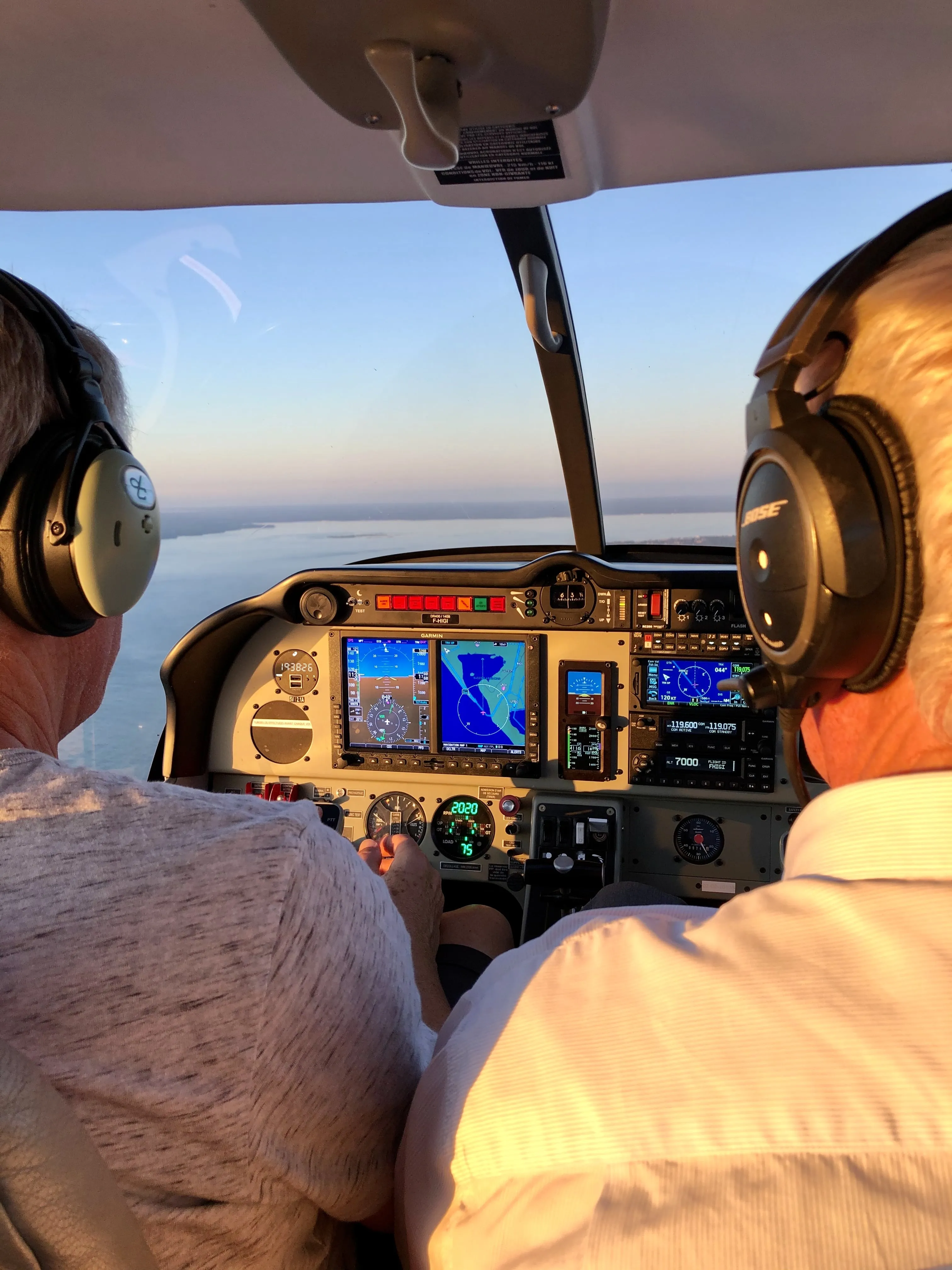
The simulator freezes on short final. Your instructor resets the weather, reloads the approach, and ten minutes later you are established again. It is excellent training. The awkward part comes afterward: what exactly belongs in your logbook?
The answer does not depend on how realistic the session felt. It depends on the device’s regulatory approval, why you used it, and which requirement you want the time to satisfy.
That is why logging a home simulator as an AATD, putting FFS time in the PIC column, or assuming every EASA FSTD can maintain passenger recency creates trouble. Similar-looking devices do not necessarily earn the same credit.
TL;DR
- Simulator time is not aircraft flight time. Keep it separate from aircraft total time, PIC, SIC, solo, night, and cross-country time.
- Under FAA §61.51, record the date, lesson time, device type and identification, the relevant training or experience category, and simulated instrument conditions when applicable.
- FAA instrument-rating experience in a device requires an authorized instructor to observe and sign. Instrument recency in an approved device does not require an instructor solely for that purpose, but the device, time, approaches, holding, intercepting and tracking work, and other content must be recorded.
- An FAA ATD can support instrument training and recency within its approval. It cannot be used for an IPC, type rating, or practical test.
- FAA passenger takeoff and landing recency can be completed in an approved FFS or FTD only through an approved Part 142 course. Night passenger recency uses an approved FFS, not an FTD or ATD.
- Under EASA AMC1 FCL.050, record the FSTD type and qualification number, FSTD instruction, date, session time, accumulated FSTD time, and the exercise performed.
- EASA FSTD time is instrument ground time when it is instruction in simulated instrument flight. It is not aircraft flight time or PIC flight time.
- EASA FCL.060 passenger recency specifically permits an FFS representing the same type or class. FNPT, FTD, and BITD credit depends on the exact training, test, or revalidation rule.
Start with the device, not the marketing name
“Simulator” is useful in conversation, but it is too vague for a regulatory decision. A desktop programme, an FAA-approved AATD, and a Level D FFS can all be called simulators. Their legal uses are very different.
FAA device categories
The FAA uses three main families:
| Device | What the name means | Where approval comes from |
|---|---|---|
| ATD | Aviation training device, approved as a BATD or AATD | FAA letter of authorization under the current ATD guidance |
| FTD | Flight training device | Qualified under 14 CFR Part 60 |
| FFS | Full flight simulator | Qualified under 14 CFR Part 60 |
A BATD is a basic aviation training device. An AATD meets the FAA’s advanced criteria. Both are approved by a letter of authorization, commonly called an LOA. The LOA belongs to a defined make, model, hardware and software configuration. A setup does not become an AATD because the owner calls it one.
The FAA’s active AC 61-136B explains ATD approval and use. It also makes an important boundary explicit: ATDs are not for practical tests, aircraft-type-specific training, or type ratings. FTDs and FFSs are governed separately under Part 60.
Do not infer credit from the apparent sophistication of a device. Check its approval, its configuration, and the regulation or approved course under which it is being used.
EASA device categories
EASA uses FSTD as the umbrella term for flight simulation training devices. For aeroplanes, that family includes:
- Full flight simulator, or FFS
- Flight training device, or FTD
- Flight and navigation procedures trainer, or FNPT
- Basic instrument training device, or BITD
For helicopters, FSTD covers FFS, FTD, and FNPT. BITD is an aeroplane device.
The qualification level tells you what the device can represent. It does not, by itself, tell you whether a particular hour counts toward your licence or rating. Part-FCL must also permit that device for the relevant course, exercise, skill test, or proficiency check, and the training organisation must use it within an appropriate programme.
The rule both systems share
Device time and aircraft flight time are different records.
Under FAA rules, flight time is time in an aircraft. The PIC, SIC, and solo provisions in §61.51 also refer to operating or occupying an aircraft. Sitting in the left seat of an FFS does not turn the session into aircraft PIC time.
EASA draws the same boundary. Part-FCL defines instrument flight time as time controlling an aircraft in flight solely by reference to instruments. It defines instrument ground time as instruction in simulated instrument flight in an FSTD. Those hours can both form part of “instrument time,” but they are not interchangeable flight-time entries.
This does not make device time worthless. A rule can expressly credit it toward training, recent experience, a rating, or even a limited portion of an experience requirement. Record the session honestly in its own category, then apply only the credit that the governing rule allows.
How to log FAA simulator time
Section 61.51 controls the basic record. When the entry documents training, certificate or rating experience, a flight review, or recent experience, record:
- The date
- Total lesson time
- The lesson location for an FFS or FTD lesson
- The type and identification of the FFS, FTD, or ATD
- The applicable experience or training category
- Simulated instrument conditions, when applicable
The location clause in §61.51(b)(1)(iii) specifically names FFS and FTD lessons, not ATDs. Recording the training facility for an ATD session is still useful, but do not misquote that sentence as an ATD-specific location mandate.
For an ATD, a practical identification might include the approval category, manufacturer, model, and the identifier used by the school or operator. Keep a copy of, or reliable access to, the current LOA. It establishes the approved configuration and permissible uses. A generic entry such as “simulator 1.5” does not preserve enough information to verify the credit later.
Extra records for instrument recency
If the session is used for FAA instrument recency, §61.51(g)(3) and (g)(5) add detail. Record:
- The location and type of each instrument approach
- The training device used
- The time
- The session content
- Holding procedures and tasks
- Intercepting and tracking courses with electronic navigation systems
The last two items matter because six approaches alone do not complete §61.57(c). You also need holding and intercepting and tracking work in the preceding six calendar months.
An entry such as this is far easier to defend than “AATD, 1.2”:
5 October 2026 | 1.2 device hours | AATD, manufacturer and model, device ID | KAPA ILS 35R x2, RNAV 17L x2; KDEN ILS 34L x2; holding at CASSE; VOR and GPS intercepting and tracking; simulated instrument conditions; instrument recency under §61.57(c).
The device still has to represent the aircraft category for the instrument privileges being maintained, and it must be used within its FAA authorization.
When an FAA instructor signature is required
This is one of the most misunderstood distinctions.
If device time is being used to acquire instrument aeronautical experience for a certificate or rating, §61.51(g)(4) requires an authorized instructor to be present, observe the time, and sign the logbook or training record to verify the time and training content.
If you log training time, §61.51(h) requires a legible instructor endorsement containing a description of the training, lesson length, instructor signature, certificate number, and the applicable certificate expiration or recent-experience end date.
If an approved device is used only to satisfy instrument recency, §61.51(g)(5) does not independently require an instructor. It requires a record specifying the device, time, and content. If the session is also instruction, however, the training endorsement rules still apply.
The clean question is not “Was this in a simulator?” It is “What legal purpose am I claiming for this session?”
What FAA device time can count toward
The device label alone never answers this question. The exact rule does.
| FAA purpose | ATD | FTD | FFS | Main limitation |
|---|---|---|---|---|
| Instrument recency under §61.57(c) | Yes | Yes | Yes | Approved device, correct category, required tasks and record |
| Instrument-rating experience under §61.65 | Limited | Limited | Limited | Instructor required; device and combined caps apply |
| Instrument proficiency check | No | Yes | Yes | Representative device and authorized check giver |
| Flight review | No | Yes | Yes | Approved Part 142 course and §61.56(i) conditions |
| Day passenger takeoff and landing recency | No | Yes | Yes | Approved for landings and used in a Part 142 course |
| Night passenger takeoff and landing recency | No | No | Yes | Approved for takeoffs and landings, night visual setting, Part 142 course |
| ATP experience under §61.159 | No | Limited | Limited | Approved programme and purpose-specific caps |
| Aircraft PIC, SIC, solo, or flight time | No | No | No | Device time is recorded separately |
Instrument-rating limits
Under §61.65, up to 10 hours in a BATD or 20 hours in an AATD may be credited toward the instrument-time requirement when the device, instructor, and tasks satisfy the rule.
For an FFS or FTD, the maximum is 30 hours when the time is completed under Part 142, otherwise 20 hours. Except for the Part 142 provision, the combined FFS, FTD, and ATD credit cannot exceed 20 hours.
These are maximum regulatory credits, not a promise that every syllabus or device permits the maximum. The device authorization and training programme can be narrower.
An AATD cannot provide an IPC
An AATD may be used for instrument recency, but §61.57(d) does not authorize an ATD for an instrument proficiency check. Other than the glider provisions, the IPC must be completed in an appropriate aircraft, FFS, or FTD and given by an authorized person.
That distinction matters after the additional six-calendar-month requalification window has passed. You cannot substitute a well-equipped AATD session for the IPC required by the regulation.
Passenger recency is not the same as instrument recency
The FAA allows the general three-takeoff-and-landing passenger requirement in an FFS or FTD only when the device is approved for landings and used in an approved Part 142 course.
For night passenger recency, §61.57(b)(2) is narrower. It permits an FFS approved for takeoffs and landings, with the visual system set to the required night period, in an approved Part 142 course. It does not list an FTD or ATD.
A home AATD session with three landings therefore does not restore passenger currency, even if those landings looked convincing on screen.
ATP credit excludes ATDs
The draft version of this article suggested limited AATD credit toward an ATP certificate. That is not what §61.159 says.
The rule permits limited FFS or FTD credit in defined circumstances. It allows up to 25 hours of FFS training toward the 50-hour airplane-class requirement when completed in an approved Part 121, 135, 141, or 142 course. It permits limited FFS or FTD instrument credit, and no more than 100 hours of qualifying FFS or FTD experience toward the total aeronautical experience requirement. ATDs are excluded from those provisions.
Keep ATP-applicable device totals separate enough to identify the device and approved programme. A single lifetime “simulator” total is not enough for an ATP audit.
How to log EASA FSTD time
EASA’s Easy Access Rules for Aircrew consolidate Part-FCL with its acceptable means of compliance and guidance material.
FCL.050 requires a reliable flight record in the form and manner established by the competent authority. AMC1 FCL.050 gives the expected fields for each FSTD session:
- Type and qualification number of the training device
- FSTD instruction
- Date
- Total time of the session
- Accumulated total FSTD time
The logbook instructions add that the FSTD field should identify the aircraft type and device qualification number. For other training devices, enter FNPT I or FNPT II as appropriate. The total session includes the exercises performed in the device, including the pre-flight and after-flight checks. Record the exercise in remarks, such as operator proficiency check, proficiency check, or revalidation.
If the time is instruction for a licence or rating, it may be summarized as instrument ground time when certified by the appropriately rated or authorized instructor from whom it was received. Follow your competent authority’s accepted format and any ATO or operator record requirements.
A realistic EASA entry
An EASA simulator record might read:
05/10/2026 | A320 FFS, qualification DE-1A-123 | 4:00 | LPC/OPC, recurrent training, low-visibility procedures and rejected takeoff | accumulated FSTD 386:20 | examiner or instructor certification as applicable.
For an FNPT session, identify FNPT I or FNPT II, the device qualification details available from the organisation, the duration, the instruction received, and the exercises performed.
Do not put the session into aircraft PIC or aircraft total-time columns. Where the session is simulated instrument instruction, record it as instrument ground time in the appropriate place.
What EASA FSTD time can count toward
EASA does not have a general FAA-style rule under which any approved FSTD hour can be applied to a broad range of purposes. The relevant Part-FCL course or check provision names the acceptable device and its limits.
Examples include:
- Passenger recency: FCL.060 permits the required three takeoffs, approaches, and landings in an aircraft of the same type or class or an FFS representing it. At night, it permits the required event in that aircraft or FFS, unless the pilot holds an IR.
- IR(A) revalidation: When the IR revalidation is not combined with a class or type rating revalidation, FCL.625.A permits an FNPT II or FFS representing the relevant class or type. At least each alternate proficiency check must be performed in an aeroplane.
- IR(H) revalidation: FCL.625.H permits a representative FTD 2/3 or FFS for the stated proficiency check, again with at least each alternate check in a helicopter.
- Initial instrument training: The amount and type of FSTD credit depend on the exact integrated, modular, competency-based, or basic instrument rating course. Training must follow the applicable Part-FCL syllabus at the appropriate organisation.
- ATPL experience: Part-FCL allows limited FFS and FNPT credit toward specified aeroplane or helicopter ATPL experience requirements. Device and sub-limit rules apply.
The practical lesson is simple: do not write “FNPT II counts” without finishing the sentence. Counts toward what, under which course or check, and up to what limit?
EASA passenger recency specifically requires an FFS
FCL.060 is precise. An FFS representing the relevant type or class can be used for the 90-day takeoff, approach, and landing requirement. An FNPT, FTD, BITD, AATD, or unqualified home simulator cannot be substituted under that paragraph.
This is different from IR revalidation, where an FNPT II may be accepted in the stated circumstances. A device authorized for one purpose is not automatically authorized for another.
FAA and EASA records are not interchangeable
| Question | FAA | EASA |
|---|---|---|
| Umbrella term | FFS, FTD, or ATD as separately defined | FSTD, including FFS, FTD, FNPT, and for aeroplanes BITD |
| Basic device identity | Type and identification | Type and qualification number |
| Instrument session category | Device, lesson, training, or recency record as applicable | Instrument ground time when receiving simulated instrument instruction |
| PIC flight time in device | No | No |
| Instructor for initial instrument credit | Yes | Course and instructor requirements apply |
| Instructor solely for instrument recency | Not required by §61.51(g)(5) | No equivalent general six-month task rule |
| Passenger recency | FFS or FTD under limited Part 142 conditions; FFS only for night route | FFS representing same type or class |
If you hold both FAA and EASA credentials, keep the underlying session details rather than forcing the entry into one authority’s shorthand. Device identity, qualification or authorization, session content, signatures, and purpose let you calculate credit under either system later.
How Skyden handles simulator sessions
Skyden treats a simulator as its own record rather than an aircraft flight. When you add a simulator, you can store a simulator ID, manufacturer, model, and variant. A session has its own date and total simulator time, and simulator totals remain separate from flight-time totals.
The session can also include crew members, simulator and simulator-instructor roles, checkride or IPC flags, remarks, and a signature. That structure avoids accidentally adding device time to aircraft PIC or total flight time.
There is one important practical limitation: Skyden’s current simulator flow does not retain approaches, holding, or intercepting and tracking as structured procedure fields. If an FAA session is being used for instrument recency, write those required details in remarks. Include each approach location and type, holding work, intercepting and tracking work, device identification, and the purpose of the session.
For EASA records, use the simulator ID and device description consistently for the qualification number and type. Put the FSTD instruction and exercise in remarks, and obtain the required instructor or examiner certification when applicable. The pilot remains responsible for confirming that the device and session qualify for the claimed credit.
Common simulator logging mistakes
Logging device time as PIC or aircraft total time
Being assigned as pilot flying in an FFS is not the same as logging aircraft PIC flight time. Use the simulator or FSTD field and the appropriate training category.
Treating every simulator as approved
Visuals, motion, a replica panel, and a commercial product name do not establish regulatory status. Verify the FAA LOA or FSTD qualification certificate and make sure the actual configuration matches it.
Recording only the duration
“SIM 1.5” does not identify the device or prove what happened. Record the device, purpose, exercises, approaches where applicable, and instructor or examiner details.
Assuming an instructor is always required, or never required
Under FAA rules, instructor involvement depends on the purpose. Initial certificate or rating experience and logged training need the appropriate observation and endorsement. Instrument recency does not need an instructor solely because a device is used. EASA sessions follow the requirements of the applicable course, check, and competent authority.
Confusing instrument recency with passenger recency
An FAA AATD can support §61.57(c) instrument recency but not ordinary takeoff and landing passenger recency. Under EASA, an FNPT II may support certain IR revalidations but does not replace the FFS named by FCL.060.
Applying the highest possible credit automatically
Regulations state ceilings. A device LOA, approved course, ATO programme, operator programme, or competent authority may produce a lower usable amount. Before relying on the hours for an application, audit them against the exact route you followed.
A five-step check before claiming credit
- Identify the authority. Decide whether the session will support an FAA or EASA requirement.
- Verify the device. Check the current LOA, qualification certificate, configuration, and approval period.
- Name the purpose. Training, rating experience, instrument recency, proficiency check, passenger recency, and ATP experience have different rules.
- Capture the evidence. Record the device, date, time, content, exercises, approaches, and signatures required for that purpose.
- Apply the correct limit. Use the governing regulation and approved programme, not the largest number printed in a marketing brochure.
The most defensible simulator entry is not the longest one. It is the one that lets an instructor, examiner, operator, or authority reconstruct exactly what you did and why the time qualifies.
Frequently asked questions
Does simulator time count as flight time?
No. Time in an FAA training device or EASA FSTD is not aircraft flight time. Record it separately as device, simulator, lesson, or instrument ground time, as applicable. A specific rule may still credit it toward a certificate, rating, recent-experience requirement, or total aeronautical experience.
Can I log PIC time in a simulator?
Not as aircraft PIC flight time. FAA and EASA PIC flight-time provisions concern time in an aircraft. A training record may identify your simulator role, but the session belongs in its own device-time category.
Does an FAA instructor need to sign every simulator session?
No. An instructor must observe and sign device time used to acquire instrument experience for a certificate or rating. Logged training time also needs the §61.51(h) endorsement. Instrument recency under §61.57(c) does not independently require an instructor, but the device, time, approaches, and session content must still be recorded.
Can an AATD be used for an FAA instrument proficiency check?
No. Section 61.57(d) permits an appropriate aircraft or, other than for gliders, a representative FFS or FTD. It does not list an ATD for an IPC.
Can simulator time count toward an FAA ATP certificate?
Some FFS and FTD time can receive limited credit under §61.159 when completed in the required approved programme. ATD time does not receive ATP credit under that section. Different caps apply to the airplane-class, instrument, and total-experience requirements.
What must be recorded for an EASA FSTD session?
AMC1 FCL.050 calls for the device type and qualification number, FSTD instruction, date, total session time, and accumulated FSTD time. The logbook instructions also call for the exercise performed in remarks, such as a proficiency check or revalidation.
Can an FNPT maintain EASA passenger recency?
No. FCL.060 names an aircraft of the same type or class or an FFS representing it. An FNPT may be accepted for a different training or IR-revalidation purpose when the relevant rule says so, but that does not make it valid for passenger recency.
How should I identify an FAA ATD in my logbook?
Record the device type and identification, using its BATD or AATD status, manufacturer, model, and local identifier as appropriate. Retain access to the current LOA for the approved configuration and authorized uses.
For broader record-keeping guidance, see FAA pilot logbook requirements, EASA pilot logbook requirements, and our detailed guide to FAA instrument currency.
 Try Skyden Free