
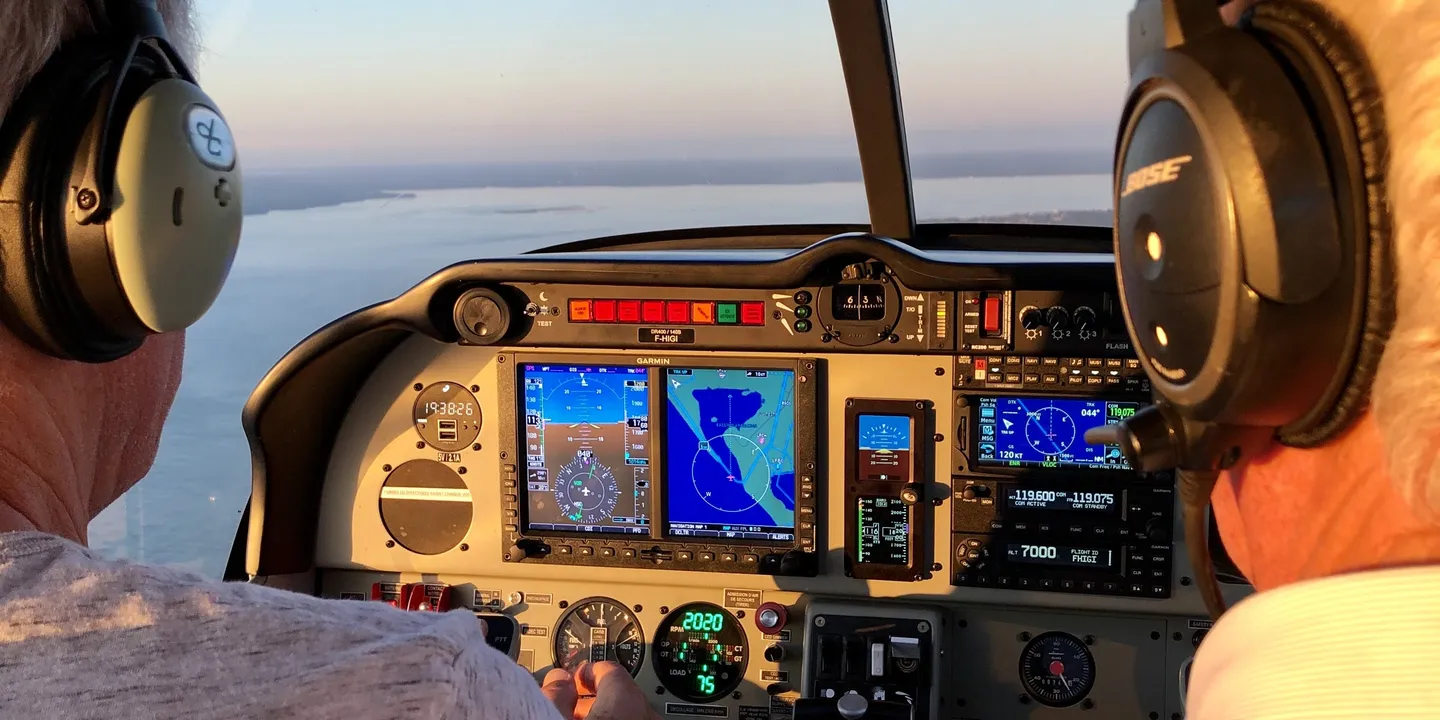
FAA flight review requirements normally mean at least one hour of ground training, one hour of flight training, and an instructor’s endorsement of satisfactory completion. To act as pilot in command (PIC), you must meet the 24-calendar-month requirement or qualify for an exception. Those are the starting rules in 14 CFR §61.56.
For example, a review completed on June 5, 2024 remains within the flight-review window through June 30, 2026. Passenger currency, instrument currency, and medical qualification require separate checks. This guide explains the standard review, alternatives, and records to keep.
Flight review requirements at a glance
| Question | Standard rule |
|---|---|
| When is it due? | By the end of the 24th calendar month after the completion month |
| How much training? | At least one hour each of ground and flight training, subject to exceptions |
| What does ground training cover? | Current Part 91 general operating and flight rules |
| What does the flight cover? | Maneuvers and procedures selected to demonstrate safe exercise of pilot privileges |
| What proves completion? | Logged training and the satisfactory-completion endorsement |
| Can another event qualify? | Certain practical tests, proficiency checks, or a completed WINGS phase |
The governing provisions are §61.56(a) through (i). The exceptions and simulator conditions below matter when deciding which path applies to you.
How the 24-calendar-month rule works
To calculate the usual deadline, take the month of satisfactory completion, advance two years, and use that month’s last day. Section 61.56(c) measures eligibility by calendar months rather than a fixed number of days.
Here are three worked examples using that rule:
| Review completed | Last day within the review window | Boundary detail |
|---|---|---|
| June 5, 2024 | June 30, 2026 | July 1 requires a new qualifying event |
| June 30, 2024 | June 30, 2026 | Same deadline as a review early in June |
| February 29, 2024 | February 28, 2026 | The last day of February controls |
A 730-day reminder would bring the deadline forward. Set your reminder from the actual completion month, then schedule training early enough to allow for weather, aircraft availability, or additional instruction.
Hypothetical example: your endorsement is dated June 5, but you remember the review as a July flight. Booking the next review for July 10 two years later leaves a gap after June 30. Checking the signed entry when making the appointment catches the mistake.
What happens during a flight review?
A flight review is recurrent training with an evaluation of proficiency. The instructor tailors it to your flying, aircraft, experience, and areas needing work. FAA guidance describes this approach in AC 61-98E, Chapter 4.
You may still hear biennial flight review, or BFR. The FAA now uses flight review, explaining that proficiency training may be appropriate more often than every two years. “Biannual” is especially unhelpful because it can mean twice a year. AC 61-98E, §1.7.1
Ground and flight training
The ground discussion should connect rules with decisions you actually make. For a planned cross-country, that could mean reviewing weather, fuel, airspace, aircraft performance, and alternatives if conditions change. The FAA’s Conducting an Effective Flight Review guide uses a cross-country assignment to bring these topics together.
Before the flight, discuss your usual flying with the instructor. A pilot returning after a long break may need different preparation from someone flying weekly or transitioning to new avionics. Agree on a plan that addresses those needs.
The standard one-hour ground and one-hour flight minimums are separate. Organizing paperwork on the ground cannot replace flight training. More time may be necessary to demonstrate proficiency. AC 61-98E, §4.1.1
Can you fail a flight review?
There is no practical-test failure result. If performance is unsatisfactory, the instructor records the training given and withholds the completion endorsement. Additional training may follow. An unsuccessful attempt does not itself cancel an earlier review that remains current. AC 61-98E, §4.4
Who can conduct it, and in which aircraft?
Use an authorized instructor with the appropriate qualifications for the aircraft and instruction involved. For a typical airplane review, that includes the relevant category and class ratings on both pilot and flight instructor certificates, plus a type rating on the pilot certificate when required. Instructor privileges must also be current. §61.195(b) and (e), §61.197
The aircraft must be one for which you are rated. FAA guidance generally allows a review in one aircraft to satisfy the flight-review requirement across your ratings. Aircraft-specific provisions can add requirements, including the Robinson R-22 and R-44 rules in SFAR 73. Discuss those with your instructor rather than assuming every review covers every aircraft. AC 61-98E, §4.2.1, AC 61-65K, endorsements A.66 and A.68
Can two instructors split the review?
Yes. The FAA’s Newman interpretation of July 28, 2015 confirms that one instructor may provide the ground portion and another the flight portion. Each must endorse satisfactory completion of the portion they conducted. An appropriately qualified ground instructor may provide the ground portion within §61.215 privileges.
For example, you could arrange ground training with one instructor and the flight with another. Tell both instructors beforehand, bring the first entry to the second session, and check that the records identify both completed portions. Two unrelated lesson entries should not leave the reader guessing whether a flight review was completed.
The flight review logbook endorsement
Keep both the training entries and evidence of satisfactory completion. Section 61.51(a) and (h) governs recording training, including its description, duration, and instructor endorsement. Our guide to FAA pilot logbook requirements explains the broader entry requirements.
For the FAA’s recommended flight review endorsement wording, use sample A.69 in AC 61-65K, Appendix A, page A-20. That is the current advisory circular issued November 14, 2025. Its opening instructions on page A-7 explain the signature details. Download AC 61-65K
The following is an adapted example, not a substitute for an instructor determining and certifying satisfactory completion:
I certify satisfactory completion of the flight review required under 14 CFR §61.56(a) by [pilot full name], [pilot certificate grade and number], on [completion date].
[Instructor signature] · [Date signed]
CFI certificate number: [number]
Recent experience end date: [date], or certificate expiration date: [date], as applicable.
The FAA sample is recommended wording; the regulation requires certification of satisfactory completion rather than a particular verbatim sentence. Use the instructor’s applicable recent-experience end date or certificate expiration date. Do not omit the signature information simply because the flight entry is digital. AC 61-65K, Appendix A
A receipt or generic attendance certificate does not establish that the instructor found your performance satisfactory. For a standard review, retain the actual logbook endorsement. For a qualifying checkride or WINGS alternative, keep the evidence appropriate to that event. The distinction follows the separate routes in §61.56(c), (d), and (e).
Before leaving, check the pilot details, completion date, signature, and instructor information. If something is missing, ask the instructor to correct it while the session is fresh.
Exceptions and alternatives to the standard review
Qualifying practical tests and proficiency checks
Section 61.56(d) recognizes qualifying pilot proficiency checks or practical tests for a certificate, rating, or operating privilege. The check must be conducted by an examiner, approved pilot check airman, or U.S. Armed Force. The same calendar-month window applies.
It also recognizes examiner-conducted CFI practical tests for initial issuance, an additional instructor rating, meeting instructor recent-experience requirements, or reinstating instructor privileges. The current instructor provisions are §61.197(b)(1) and §61.199(b)(2).
Do not assume every event called a “check” qualifies. If using an employer’s recurrent check, identify the applicable check and retain its completion record.
Completing a WINGS phase
Completing a phase of the FAA’s WINGS Pilot Proficiency Program satisfies the flight-review requirement. The qualifying date is the phase completion date. Individual courses or seminar attendance alone do not amount to a completed phase. WINGS combines knowledge and flight activities appropriate to the pilot’s category and class. FAA WINGS program
Ground-training relief for flight instructors
Under §61.56(f), eligible flight instructors need not complete the one-hour ground portion if, within the applicable window, they satisfied §61.197 recent-experience requirements or reinstated instructor privileges through an approved refresher course under §61.199(a)(1).
This relief concerns the ground hour. A refresher course by itself does not automatically replace the entire flight review. Distinguish that relief from a qualifying CFI practical test.
Glider pilots and student pilots
Glider pilots may replace the flight hour with at least three instructional glider flights, each reaching traffic-pattern altitude. Student pilots undergoing certificate training with a current §61.87 solo endorsement are exempt. §61.56(b) and (g)
That student exception does not automatically cover a certificated pilot training for another category or class. The Newman interpretation specifically addresses a rated pilot adding glider privileges: the pilot still needs to meet the flight-review requirement before solo flight.
Can you use a simulator for a flight review?
Yes, under specific conditions. Section 61.56(i) permits a flight simulator or flight training device when:
- It is used in an approved course conducted by a Part 142 training center.
- It represents aircraft for which the pilot is rated.
- The pilot meets §61.57(a) or (b) takeoff-and-landing requirements, unless using a simulator approved for landings.
An approved Part 142 review is a way to conduct the review, not an exemption from completing it. A home simulator session does not qualify. Nor should you assume an aviation training device approved for instrument recency can replace the flight-review flight portion. Device permissions depend on the activity; see how to log simulator time for those distinctions.
What if your flight review has lapsed?
Your pilot certificate does not expire because the review window ends. You must meet the flight-review requirement again before acting as PIC, whether through a new review or an applicable alternative. There is no general grace period in §61.56(c).
Arrange training with a qualified instructor who can act as PIC. If you cannot legally act as PIC, do not plan to fly yourself solo to the review appointment. Discuss the aircraft, flight, and PIC responsibilities with the instructor when booking.
Logging PIC is a separate question. A suitably rated pilot receiving training may log sole-manipulator PIC time under §61.51(e)(1)(i) while the instructor acts as PIC. That logbook entry does not by itself restore flight-review eligibility. Our explanation of what counts as PIC time covers the distinction.
Discuss medical qualification too. A trainee who neither acts as PIC nor serves as a required flightcrew member does not automatically need a current medical certificate merely to receive instruction. The acting PIC must meet the medical requirements applicable to the operation. §61.3(c), §61.23
Flight review vs passenger and instrument currency
A current review alone does not establish eligibility for every flight. For typical Part 91 operations, consider these separate requirements:
| Requirement | What to check |
|---|---|
| Flight review | Qualifying review or alternative within the 24-calendar-month window |
| General passenger currency | Required takeoffs and landings in the preceding 90 days, with category, class, and applicable type requirements |
| Night passenger currency | Required full-stop landings and takeoffs in the preceding 90 days, within the specified night period |
| Instrument currency | Qualifying recent instrument experience or an IPC, as applicable |
The passenger and instrument provisions are in §61.57. For instrument flying, read our detailed FAA instrument currency guide. Night passenger currency also uses a different time window from some other uses of “night”; our night-time calculation guide explains the difference.
A routine IPC conducted by a CFII does not automatically satisfy the flight-review requirement. Your instructor can combine the activities when all requirements for both are met and the appropriate endorsements are made. Arrange that scope before the session. FAA Safety Briefing, September/October 2015, §61.56(h)
What to bring and how to prepare
Agree on the plan with your instructor when booking. Useful preparation includes:
- Your logbook, previous review endorsement, and any qualifying test or WINGS records.
- Pilot certificate, identification, and medical or BasicMed documents as applicable to your role and operation.
- Aircraft operating handbook and the performance information needed for the planned flight.
- A clear account of recent flying, aircraft changes, and areas you want to practice.
- Any cross-country plan or reading the instructor requested.
The FAA’s flight review preparation guide offers planning worksheets and a suggested regulatory review. Treat it as preparation material alongside the current regulation and AC 61-98E.
Organize the relevant records beforehand so the instructor can find them quickly. A short note listing your last review, recent aircraft experience, and training goals is useful. There is no need to reconstruct your entire flying history during the appointment.
Keep the deadline and the evidence together
After completion, record the event date, calculate the month-end deadline, and set an advance reminder. Keep the signed endorsement or qualifying-event evidence somewhere you can retrieve and back up. When migrating logbooks, check the training records and signatures as carefully as the hour totals.
Skyden supports offline flight logging and FAA-format PDF exports, making your flight history easier to organize before a review. Keep the required endorsement with your records and verify the deadline from the qualifying event. Explore the Skyden digital logbook.
Frequently asked questions
Do I need a flight review if I fly every week?
Frequent flying does not itself satisfy §61.56. You still need a qualifying review or an applicable alternative. Your recent flying is useful information for planning the review, particularly when choosing skills to practice.
Where can I find the FAA flight review endorsement PDF?
Use AC 61-65K, Appendix A, sample A.69 on page A-20. Read the signature instructions on page A-7 too. The sample supports an instructor’s certification after satisfactory completion; downloading or filling in a template does not create that certification.
Does an online course count as a flight review?
An online preparation course alone does not complete a standard review. For the WINGS alternative, verify that you completed a whole phase with the required knowledge and flight activities. An individual course credit is only part of that process. FAA WINGS
Can I complete the review before it is due?
Yes. Calculate the next ordinary flight-review deadline from the month you actually complete the new review. For example, completing it in May 2026 gives a May 31, 2028 deadline, even if the earlier review would have remained current through June 2026. §61.56(c)
Sources and verification
Regulations and FAA guidance checked September 26, 2026. Regulatory requirements come from the CFR; advisory circulars provide guidance and recommended practices.
- 14 CFR §61.56: Flight review
- 14 CFR §61.51: Pilot logbooks
- 14 CFR §61.57: Recent flight experience
- FAA AC 61-98E: Flight review and instrument proficiency check guidance
- FAA AC 61-65K: Certification and sample endorsements
- FAA Newman legal interpretation: Split reviews and additional-category training
- FAA WINGS Pilot Proficiency Program
 Try Skyden Free